Body Glove Wetsuit Size Guide: A Comprehensive Overview (Updated 03/14/2026)
Body Glove offers diverse wetsuits; understanding their sizing is crucial for optimal performance and comfort in the water, as detailed in their charts.
Understanding Body Glove Wetsuit Sizing
Body Glove wetsuit sizing isn’t simply about small, medium, or large; it’s a nuanced system designed to accommodate various body types for a secure, comfortable fit. Body Glove provides detailed size charts categorized by gender – men’s, women’s, and youth – emphasizing chest, bust, hip, height, and weight measurements.
Accurate sizing ensures optimal thermal protection, freedom of movement, and prevents water flushing, crucial for extended water sessions. Different wetsuit styles, like fullsuits or shortys, may also influence fit preferences. Consulting the official Body Glove size guide, alongside considering individual body shape and intended water activity, is paramount for selecting the correct size.
Why Accurate Sizing Matters
Body Glove wetsuit sizing directly impacts performance and safety. A properly fitted wetsuit minimizes water entry, maintaining core body temperature and preventing hypothermia, especially in colder waters. Ill-fitting suits restrict movement, hindering paddling, surfing, or diving capabilities.
Too-tight wetsuits cause discomfort, chafing, and reduced circulation, while loose suits allow excessive water flushing, negating thermal protection. Accurate sizing maximizes the wetsuit’s lifespan by reducing stress on seams and neoprene. Investing time in precise measurements and referencing the Body Glove size chart ensures a comfortable, functional, and safe water experience.
General Sizing Principles for Body Glove Wetsuits
Body Glove wetsuits generally adhere to standard sizing, but variations exist based on style and neoprene thickness. Prioritize chest and waist measurements for the most accurate fit, as these areas determine overall suit dimensions. Height and weight serve as secondary guides, particularly for youth sizes.
Remember that neoprene compresses with use, so a snug fit is preferable to a loose one. Consider your activity level; surfers may prefer a slightly tighter fit for enhanced mobility, while divers might prioritize warmth and a less restrictive feel. Always consult the specific size chart for the wetsuit style you’re considering.
Men’s Body Glove Wetsuit Size Chart
Body Glove men’s wetsuits utilize chest, height, and weight measurements for sizing, offering fullsuits and shortys tailored for various water sports activities.
Chest Measurement & Size Determination
Accurately measuring your chest is the foundational step in determining your correct Body Glove wetsuit size. Use a flexible measuring tape and have a friend assist for the most precise reading. Stand upright and breathe normally – do not pull the tape too tightly, nor leave it too loose.
Wrap the tape measure around the fullest part of your chest, keeping it level across your back. Record this measurement in inches. Consult the Body Glove size chart, aligning your chest measurement with the corresponding size (Small, Medium, Large, etc.);
Remember that wetsuit sizing can vary slightly between styles. If your measurement falls between sizes, it’s generally recommended to size up for a more comfortable fit, allowing for movement and layering. Prioritize a snug, but not constricting, fit to maximize warmth and performance.
Height & Weight Considerations for Men
While chest measurement is primary, height and weight provide valuable secondary guidance when selecting a Body Glove wetsuit for men. The size charts often include height and weight ranges associated with each size, offering a cross-reference point for accuracy.
Individuals at the higher end of a weight range for a given chest size may benefit from sizing up, ensuring adequate coverage and freedom of movement. Conversely, those lighter for their height might consider sizing down.
Consider your body type – muscular builds may require more room, while leaner builds might prefer a closer fit. These are guidelines; prioritize comfort and range of motion during water activities.
Men’s Specific Wetsuit Styles & Fit (e.g., Fullsuit, Shorty)
Body Glove offers various men’s wetsuit styles, each influencing the ideal fit. Fullsuits, covering the entire body, require a snug fit to minimize water flushing and maximize warmth. Shorty wetsuits, with shorter arms and legs, prioritize flexibility for warmer waters and active sports.
Consider the intended activity; surfers often prefer a slightly looser fit for unrestricted paddling, while divers may favor a tighter fit for better thermal protection.
Pay attention to neck and wrist seals – these should be snug but not constricting. Proper fit varies by style; consult specific style guides alongside general sizing charts for optimal performance.
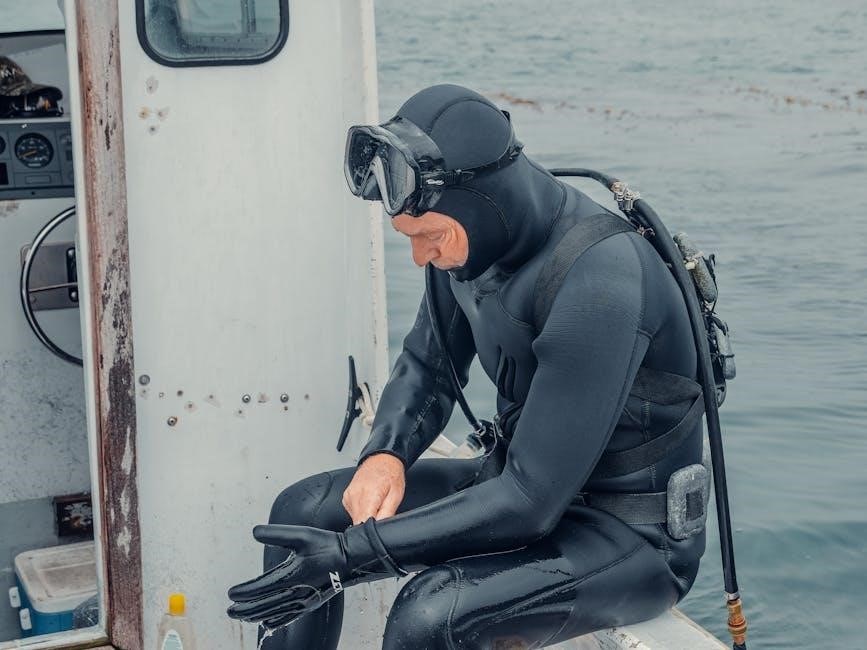
Women’s Body Glove Wetsuit Size Chart
Body Glove women’s wetsuits utilize bust and hip measurements for accurate sizing, differing from men’s charts, ensuring a comfortable and performance-driven fit.
Bust & Hip Measurement & Size Determination
Accurately measuring your bust and hips is paramount when selecting a Body Glove wetsuit designed for women. Begin by wearing a minimal amount of clothing – ideally, just your undergarments – to ensure precise measurements. For the bust, measure around the fullest part of your chest, keeping the measuring tape level.
Next, measure your hips at the widest point, again ensuring the tape is horizontal. Compare these measurements to the Body Glove size chart, which typically correlates specific bust and hip ranges to corresponding wetsuit sizes (e;g., Small, Medium, Large). It’s crucial to note that sizes can vary slightly between different wetsuit styles, so always consult the specific chart for the model you’re considering. If your measurements fall between sizes, it’s generally recommended to size up for a more comfortable fit and greater freedom of movement.
Height & Weight Considerations for Women
While bust and hip measurements are primary, Body Glove also considers height and weight when determining the optimal wetsuit size for women. These factors contribute to overall fit and ensure the wetsuit doesn’t restrict movement or bunch uncomfortably. The size charts often include height and weight ranges associated with each size category.
However, these ranges are guidelines; individual body types vary. A woman who is shorter but has a larger build might require a different size than someone taller with a more petite frame. Always prioritize the bust and hip measurements first, then use height and weight as secondary indicators. If you’re between sizes based on measurements, consider your build – a more athletic build might benefit from a snugger fit, while a curvier build may prefer a slightly looser one.
Women’s Specific Wetsuit Styles & Fit (e.g., Fullsuit, Springsuit)
Body Glove designs women’s wetsuits with anatomical considerations for a superior fit. Fullsuits, offering full body coverage, require precise sizing to avoid restriction, especially in the shoulders and back. Springsuits, with shorter legs and sleeves, prioritize flexibility for warmer waters.
Fit varies between styles. A performance-oriented fullsuit will generally be snug, minimizing water flushing, while a recreational fullsuit might offer a more relaxed fit. Springsuits often have a more forgiving fit due to less neoprene. Consider your intended activity; surfing demands a tighter fit than paddleboarding. Always check specific style guides, as cuts and paneling can influence sizing within the Body Glove range.

Youth Body Glove Wetsuit Size Chart
Body Glove youth wetsuits utilize age and height-based sizing, alongside weight ranges, ensuring a secure and comfortable fit for growing water enthusiasts.
Age & Height Based Sizing for Kids
Body Glove’s youth wetsuit sizing prioritizes a comfortable and secure fit for children, utilizing both age and height as primary determinants. Generally, sizes range from toddler sizes (2T-3T) up to larger youth sizes accommodating older children and teens.
For younger children, age is a reliable indicator, but as kids grow, height becomes increasingly important. Body Glove charts typically correlate specific height ranges with corresponding sizes. For example, a child aged 8-10, measuring between 52-56 inches, might fit a size 10-12.
It’s crucial to consult the official Body Glove size chart, as variations can occur between different wetsuit styles (fullsuits, springsuits, etc.). Accurate height measurement is key – have the child stand straight against a wall, and measure from the top of the head to the soles of their feet. Remember to account for growth spurts when selecting a size!
Weight Range Guidelines for Youth Wetsuits
While age and height are primary factors, Body Glove also provides weight range guidelines to refine youth wetsuit sizing, ensuring a snug yet non-restrictive fit. These ranges are approximate and should be used in conjunction with height measurements, as body types vary considerably.
For instance, a youth size 8 might correspond to a weight range of 60-75 pounds, while a size 12 could accommodate children weighing 85-100 pounds. However, a more muscular child might require a larger size even within the same height bracket.
Body Glove emphasizes that weight is a secondary consideration; prioritizing a proper height-based fit is crucial. If a child falls between weight ranges, it’s generally advisable to choose the larger size for greater comfort and freedom of movement, especially for growing children. Always refer to the official size chart for specific weight recommendations.
Adjusting for Growing Children
Children grow rapidly, making wetsuit fit a dynamic consideration. When purchasing a Body Glove youth wetsuit, consider sizing up slightly, allowing room for growth throughout the season. A little extra neoprene is preferable to a wetsuit that’s immediately too snug, restricting movement and comfort.
However, avoid excessive looseness, as this compromises warmth and buoyancy. Look for features like adjustable closures or stretchy neoprene panels that can accommodate minor size fluctuations. Regularly check the fit as your child grows, and be prepared to upgrade to the next size when necessary.
Prioritize safety and performance; a properly fitted wetsuit is essential for enjoying water activities. Remember, a slightly looser fit can be temporarily adjusted with rash guards, but a wetsuit that’s too small is unsuitable.
Taking Accurate Measurements
Body Glove wetsuit sizing relies on precise measurements; a flexible measuring tape is essential for determining chest, waist, and hip circumferences for optimal fit.
Tools You’ll Need (Measuring Tape)
A flexible measuring tape is the single most important tool for achieving an accurate Body Glove wetsuit fit. Forget rigid rulers or estimations; fabric measuring tapes conform to your body’s curves, providing the precise dimensions needed to consult the size charts effectively. Ensure the tape isn’t stretched too tightly or left too loose during measurement – a snug, but not constricting, fit is ideal.
Ideally, have a friend assist you with measurements, especially for back areas. This ensures the tape remains level and provides a more reliable reading. Mark the tape at the point of measurement for clarity, and double-check each measurement to minimize errors. Accurate measurements are the foundation of selecting the correct wetsuit size, preventing discomfort and maximizing performance in the water.
How to Measure Chest/Bust
For chest measurement (men) or bust measurement (women), stand naturally with your arms relaxed at your sides. Wrap the measuring tape around the fullest part of your chest/bust, ensuring the tape is level all the way around your body. Don’t pull the tape too tight; it should be snug but comfortable.
Exhale normally while taking the measurement. For women, wear a non-padded bra for the most accurate reading. Record the measurement in inches or centimeters, depending on the Body Glove size chart you are referencing. This measurement is crucial for determining your wetsuit size, particularly for fullsuits and springsuits, impacting overall fit and freedom of movement.
How to Measure Waist & Hips
To measure your waist, locate the natural crease of your waist – typically the narrowest part of your torso. Stand relaxed and keep the measuring tape comfortably snug, not tight, around your waist. Exhale normally during measurement for accuracy.
For hip measurement, stand with your feet together and measure around the fullest part of your hips and buttocks. Ensure the tape is level. Record both waist and hip measurements in inches or centimeters, aligning with the Body Glove size chart’s units. These measurements, alongside chest/bust size, are vital for achieving a proper wetsuit fit, especially for styles like fullsuits and springsuits.
Body Glove Wetsuit Materials & Stretch
Body Glove wetsuits utilize neoprene, varying in thickness, impacting flexibility and warmth; consider material stretch when selecting your size for optimal fit.
Neoprene Thickness & Flexibility
Body Glove wetsuits employ neoprene of varying thicknesses, directly influencing both warmth and flexibility. Thinner neoprene (e.g., 1-2mm) offers maximum flexibility, ideal for warmer waters and activities requiring a full range of motion, like surfing in tropical climates. However, it provides minimal thermal protection. Conversely, thicker neoprene (3mm and above) delivers superior insulation for colder conditions, but restricts movement somewhat.
The specific neoprene grade and construction techniques also play a role. Superstretch neoprene, often blended with other materials, enhances flexibility without sacrificing significant warmth. Understanding this relationship is vital; a tighter fit is generally preferred with thicker neoprene to minimize water flushing, while a slightly looser fit might be acceptable with thinner, more flexible options. Choosing the right thickness balances thermal comfort with the freedom of movement needed for your chosen water sport.
Impact of Material on Fit
Body Glove wetsuit materials significantly impact how a wetsuit should fit. Neoprene’s inherent properties mean it stretches, but the degree varies based on the blend and construction. Superstretch neoprene demands a snug fit, as it will expand when wet, conforming to your body. A slightly tighter initial feel is preferable to avoid bagginess and water flushing once in the water.
Standard neoprene offers less stretch, requiring a more precise size match based on your measurements. The outer lining material also influences fit; smoothskin neoprene provides a very snug, almost second-skin feel, while textured linings offer more give. Always consider the material composition when selecting your size, prioritizing a fit that allows freedom of movement without being overly loose, ensuring optimal thermal protection and performance.
Considering Stretch in Your Size Selection
Body Glove wetsuits utilize varying degrees of neoprene stretch, directly influencing size selection. Super-stretch models, designed for maximum flexibility, require a snug fit initially, anticipating expansion when wet. Choosing a size too large results in reduced warmth and performance due to water flushing.
Conversely, standard neoprene offers less stretch, demanding a closer adherence to your precise measurements. Don’t assume you can “size up” for comfort; a properly fitted wetsuit should feel firm but not restrictive. Account for the wetsuit’s intended use – surfing requires greater flexibility than diving. Prioritize a fit that allows full range of motion, considering how the material will conform to your body in the water, maximizing comfort and thermal efficiency.
Troubleshooting Common Fit Issues
Body Glove wetsuit fit problems are common; addressing tightness, looseness, and seal issues around the neck and wrists ensures optimal comfort and performance.
Wetsuit Too Tight
A Body Glove wetsuit feeling excessively tight restricts movement and hinders thermal protection. Limited flexibility impacts paddling, surfing, and overall water activities. Constriction can also cause discomfort and chafing, especially during extended use.
If experiencing this, carefully assess the areas of restriction – chest, shoulders, or limbs. Consider if the tightness stems from incorrect sizing or insufficient stretch in the neoprene. Trying a larger size, or a wetsuit with more flexible neoprene, might resolve the issue.
Ensure proper donning technique; avoid forcing the wetsuit on. If the fit remains uncomfortably tight even after adjustments, exchanging for a correctly sized wetsuit is recommended for optimal performance and enjoyment.
Wetsuit Too Loose
A Body Glove wetsuit that’s too loose compromises its ability to retain body heat, leading to rapid cooling in the water. Excessive water flushing reduces thermal protection and increases the risk of discomfort or hypothermia. Loose fits also diminish hydrodynamic efficiency, impacting performance during water sports.
If experiencing looseness, particularly around the neck, wrists, or ankles, check the seals. Adjust straps or consider using neoprene cement to improve the seal. If the overall fit is too large, a smaller size is necessary.
A properly fitted wetsuit should be snug but not restrictive, minimizing water entry while allowing freedom of movement. Exchanging for a smaller size will enhance warmth and performance.
Addressing Neck & Wrist Seal Issues
Proper neck and wrist seals are vital for a Body Glove wetsuit’s performance, preventing water flushing and maintaining warmth. If water enters around these areas, initially tighten any Velcro closures or adjustable straps present. Inspect the seals for damage like tears or stretching; these compromise the watertight barrier.
For minor gaps, neoprene cement can temporarily improve the seal, but professional repair is recommended for significant damage. Ensure the wetsuit fits snugly around these points without constricting circulation. A loose fit necessitates a smaller size.
Regularly check and maintain these seals to maximize the wetsuit’s thermal protection and overall effectiveness during water activities.
Comparing Body Glove to Other Brands
Body Glove sizing often runs similarly to Billabong and Rip Curl, but checking specific charts is essential for the best fit comparison.
Body Glove Sizing vs. Billabong
When comparing Body Glove and Billabong wetsuit sizing, surfers often find a relatively consistent fit between the two brands, particularly in standard sizes. However, subtle differences exist, necessitating careful measurement and chart consultation. Billabong tends to offer a slightly more athletic, tapered cut, while Body Glove sometimes provides a bit more room in the torso and legs.
For those with broader builds, Body Glove might be preferable, offering a less restrictive feel. Conversely, individuals seeking a snug, performance-oriented fit may lean towards Billabong. Always prioritize chest and waist measurements when cross-referencing size charts. Remember to account for neoprene thickness, as thicker suits generally require a slightly looser fit for optimal flexibility and comfort. Ultimately, individual body shape and preference play a significant role in determining the ideal brand and size.
Body Glove Sizing vs. Rip Curl
Comparing Body Glove and Rip Curl wetsuit sizing reveals that Rip Curl generally runs a bit smaller and more tailored than Body Glove. Surfers often report needing to size up in Rip Curl, especially if they are between sizes or have a muscular build. Body Glove tends to offer a more forgiving, relaxed fit, accommodating a wider range of body types.
Rip Curl’s focus on performance often translates to a closer-fitting wetsuit designed to minimize water flushing and maximize flexibility. When switching between brands, prioritize chest and height measurements. Consider that Rip Curl’s sizing charts may differ slightly based on wetsuit style (e.g., fullsuit vs. shorty). Always consult both brands’ specific size guides and, if possible, try on wetsuits before purchasing to ensure the best possible fit and comfort.
Body Glove Sizing vs. Alder
When comparing Body Glove and Alder wetsuit sizing, Alder often presents a more streamlined and performance-oriented fit, similar to Rip Curl, potentially requiring a size up for some individuals. Body Glove, conversely, typically offers a broader, more accommodating fit, suitable for various body shapes and sizes. Alder prioritizes a snug fit to minimize water entry and maximize thermal efficiency.
Individuals transitioning between these brands should meticulously review each brand’s specific size chart, focusing on chest and height measurements. Alder’s wetsuits are designed for serious water sports enthusiasts, emphasizing flexibility and warmth. Therefore, their sizing reflects this focus. If you find yourself between sizes with Alder, opting for the larger size is generally recommended. Prioritize trying on wetsuits whenever feasible to guarantee optimal comfort and performance.