Trader Joe’s Lasagna: A Comprehensive Cooking Guide
Embark on a culinary journey! Discover detailed instructions for preparing Trader Joe’s lasagna‚ from thawing to serving‚ ensuring a delightful and flavorful experience.
Understanding the Trader Joe’s Lasagna Options
Navigating the frozen aisle at Trader Joe’s reveals several lasagna choices‚ each with unique characteristics impacting cooking times and results. Currently‚ the core offering is a classic meat lasagna‚ a perennial favorite known for its rich sauce and generous layers. However‚ seasonal variations frequently appear‚ including a vegetarian spinach lasagna and occasionally‚ a chicken or mushroom-based alternative.
Understanding these differences is crucial. Meat lasagnas generally require slightly longer cooking times due to the density of the meat filling. Vegetarian options may cook faster. Always check the packaging for specific instructions‚ as Trader Joe’s occasionally updates recipes or portion sizes. Recognizing these nuances ensures optimal enjoyment of your chosen lasagna variety.

Different Varieties Available (and their cooking nuances)
Trader Joe’s lasagna selection extends beyond the traditional‚ presenting subtle cooking adjustments for each type. The classic meat lasagna‚ the most consistently available‚ benefits from a slightly longer bake to ensure the meat is thoroughly heated. The vegetarian spinach lasagna‚ lighter in density‚ often requires a shorter cooking duration to prevent the spinach from becoming overly soft.
Seasonal offerings‚ like chicken or mushroom lasagnas‚ demand careful attention to package instructions. These variations may contain different moisture levels‚ impacting cooking time. Generally‚ lasagnas with ricotta-heavy layers may need extra coverage with foil during baking to prevent excessive browning. Always prioritize the recommended cooking times on the box for the best outcome.
Initial Preparation: Thawing Considerations
Proper thawing is crucial for even cooking and optimal texture. While Trader Joe’s lasagnas can be cooked from frozen‚ thawing beforehand significantly reduces baking time and ensures the center heats through completely. For best results‚ transfer the frozen lasagna to the refrigerator 24-48 hours prior to cooking. This slow thaw preserves the lasagna’s structural integrity and prevents a soggy outcome.
Avoid thawing at room temperature‚ as this can encourage bacterial growth. If time is limited‚ a cold water bath can expedite the process – submerge the sealed lasagna in cold water‚ changing the water every 30 minutes‚ until pliable. Never re-freeze a lasagna that has been thawed.
Recommended Thawing Methods
For optimal results‚ prioritize refrigerator thawing. This method‚ requiring 24-48 hours‚ ensures even thawing and maintains the lasagna’s quality. Place the frozen lasagna on a tray to catch any potential drips. If a quicker thaw is needed‚ the cold water bath is effective. Submerge the sealed lasagna in cold tap water‚ changing the water every 30 minutes‚ for approximately 2-3 hours‚ depending on size.
Avoid using warm or hot water‚ as this can partially cook the lasagna and compromise its texture. Microwave thawing is generally not recommended due to uneven heating. Always ensure the lasagna is pliable but still cool to the touch before proceeding to baking.
Oven Baking: The Standard Approach
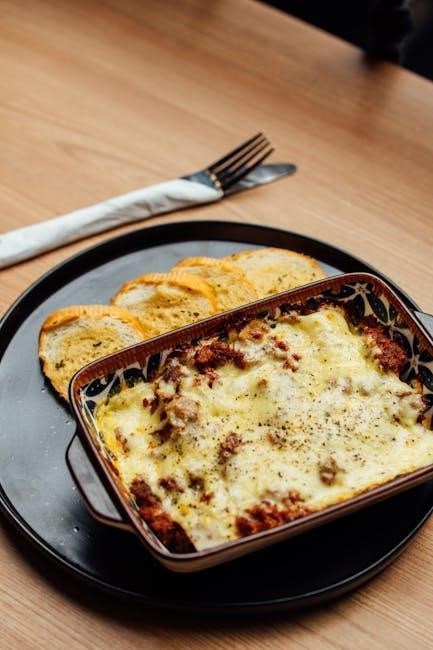
Oven baking delivers the most consistently satisfying results for Trader Joe’s lasagna. This method ensures even cooking and a beautifully browned‚ bubbly top. Begin by preheating your oven – a crucial step for uniform heating. A baking dish isn’t strictly necessary‚ as the lasagna comes in its own tray‚ but transferring it to a larger dish can prevent potential overflow during baking.
Ensure the lasagna is fully thawed before baking to guarantee thorough heating. Cover loosely with foil for the first portion of baking to prevent excessive browning‚ then remove the foil during the final stage to achieve a golden-brown crust.
Preheating and Oven Temperature
Proper preheating is paramount for successful Trader Joe’s lasagna baking. Aim for a consistent oven temperature of 375°F (190°C). Allow ample time for the oven to fully preheat – typically around 15-20 minutes – to ensure accurate and even cooking. A properly heated oven guarantees the lasagna cooks through without becoming burnt on top before the center reaches the correct temperature.
Avoid opening the oven door frequently during baking‚ as this can cause temperature fluctuations and prolong the cooking time. Maintaining a stable temperature is key to achieving a perfectly heated and textured lasagna. Consistent heat distribution is vital for optimal results.
Baking Dish Preparation
Selecting the right baking dish is crucial for even heating and preventing sticking. A 9×13 inch baking dish is generally recommended for Trader Joe’s lasagna‚ providing sufficient space for the frozen product. Lightly grease the dish with cooking spray or a small amount of olive oil to prevent the lasagna from adhering to the bottom and sides.
Alternatively‚ line the dish with parchment paper‚ leaving an overhang on the sides for easy removal after baking. This method simplifies cleanup and ensures the lasagna doesn’t stick. Avoid using dark-colored baking dishes‚ as they can cause the lasagna to brown too quickly.
Cooking Time and Temperature Variations
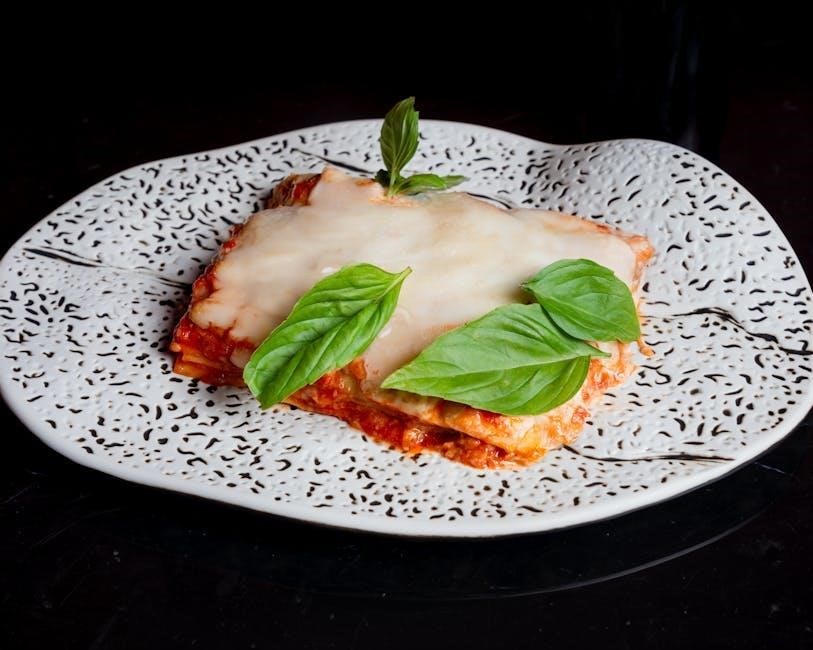
Standard baking instructions typically recommend 350°F (175°C) for approximately 60-90 minutes‚ however‚ variations exist based on whether the lasagna is fully thawed or frozen. A frozen lasagna will require a longer cooking time‚ potentially extending to 90-120 minutes. Adjustments are also necessary depending on your oven’s calibration; some ovens run hotter or cooler.
For a crispier top‚ consider broiling for the final few minutes‚ but monitor closely to prevent burning. Lowering the temperature to 325°F (160°C) and extending the cooking time can also yield a more evenly heated lasagna. Always check for doneness using visual cues‚ as detailed later.
Checking for Doneness: Visual Cues
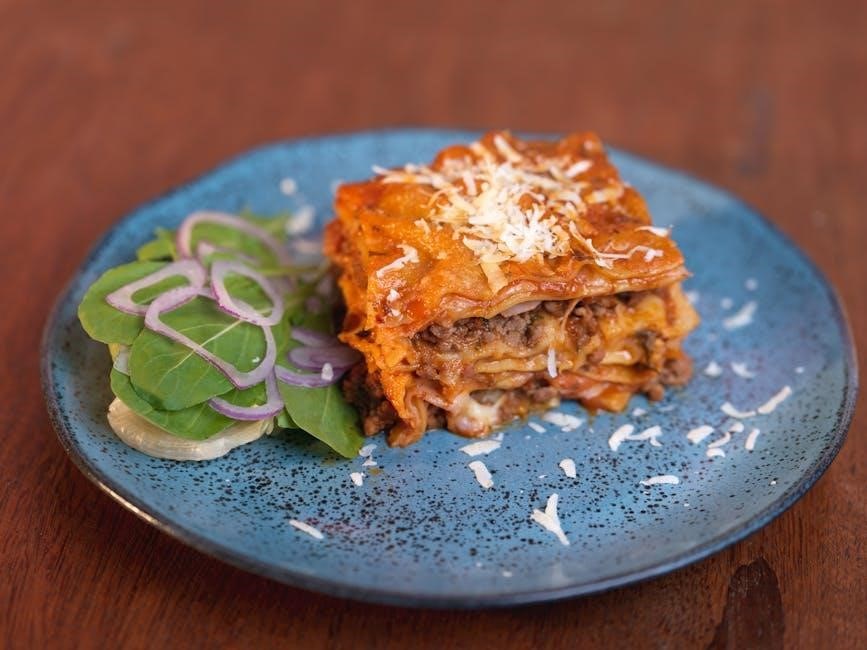
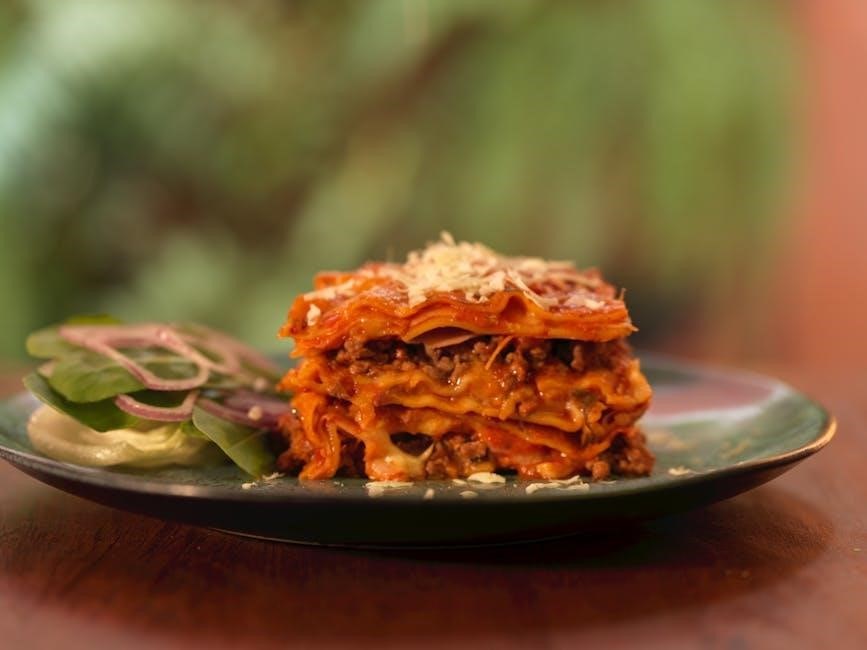
Determining doneness relies heavily on visual indicators. The lasagna should be bubbling vigorously around the edges‚ signifying the internal temperature is rising. A golden-brown and slightly crispy cheese topping is another key sign. Gently insert a knife into the center; it should slide in with minimal resistance‚ indicating the noodles are tender.
Internal temperature should reach 165°F (74°C) for safe consumption‚ though a thermometer isn’t always necessary. If the lasagna still appears liquidy in the center‚ continue baking in 10-15 minute increments‚ rechecking after each interval. Avoid overcooking‚ as this can lead to a dry and less enjoyable texture.
Microwave Cooking: A Faster Alternative
For quicker preparation‚ the microwave offers a convenient solution‚ though texture differences are expected. Begin by removing any plastic film and placing the lasagna in a microwave-safe dish. Cover loosely with microwave-safe plastic wrap‚ venting one corner to allow steam to escape.
Cooking times vary based on microwave wattage. Generally‚ cook on medium power (50%) for approximately 5-8 minutes‚ then rotate and continue cooking in 2-minute intervals until heated through. Ensure even heating by stirring or rotating the lasagna halfway through the cooking process. Always check the internal temperature reaches 165°F (74°C).
Microwave Power Levels and Times
Optimal microwave cooking hinges on power level and duration. A 700-watt microwave typically requires 8-10 minutes on medium power (50%) for a single serving of Trader Joe’s lasagna. For larger portions‚ or microwaves with differing wattage‚ adjust accordingly.
Lower power levels (30-40%) are recommended to prevent uneven heating and ensure the lasagna doesn’t become rubbery. Start with 6 minutes‚ then increase in 1-minute increments‚ checking frequently. High power should be avoided‚ as it can lead to scorching around the edges while the center remains frozen. Consistent monitoring is key for a satisfactory result.
Ensuring Even Heating in the Microwave
Achieving uniform warmth with microwave lasagna demands strategic techniques; Rotate the dish halfway through the cooking process to mitigate hot spots and promote even thawing and heating. Covering the lasagna with a microwave-safe lid or vented plastic wrap traps moisture‚ preventing dryness and aiding consistent temperature distribution.
Stirring isn’t practical with lasagna‚ but gently shifting the dish’s position is beneficial. Allow a standing time of 2-3 minutes post-microwaving; this allows heat to equalize throughout the layers. Be cautious when removing the dish‚ as it will be hot. Consistent checks and adjustments are vital for a perfectly heated meal.
Stovetop Cooking (Less Common‚ but Possible)
While unconventional‚ stovetop lasagna preparation is achievable‚ though demanding careful attention. Utilize a large‚ deep skillet with a tight-fitting lid. Begin with a low heat setting to prevent scorching the bottom layers. Add a small amount of water or tomato sauce to the skillet’s base to create steam‚ aiding even cooking.
Frequent stirring isn’t feasible‚ but gentle shaking of the skillet distributes heat. Cover tightly and cook for approximately 30-40 minutes‚ checking periodically to ensure the bottom doesn’t burn. This method requires constant monitoring and is best suited for smaller portions‚ offering a unique textural experience.
Adding Extra Ingredients: Customization Options
Elevate your Trader Joe’s lasagna with personalized additions! Vegetable Additions: Sautéed spinach‚ mushrooms‚ or bell peppers layered within enhance flavor and nutrition. Consider pre-cooking these to release excess moisture. Cheese Enhancements: A sprinkle of mozzarella‚ parmesan‚ or ricotta between layers creates a richer‚ creamier texture.
For a protein boost‚ incorporate cooked Italian sausage or ground beef. Remember to adjust cooking times slightly to ensure added ingredients are heated through. Don’t overfill the lasagna‚ as this can cause spillage during baking. Experiment with herbs like basil or oregano for an aromatic twist!
Vegetable Additions
Transform your Trader Joe’s lasagna into a garden delight with vibrant vegetable additions! Spinach is a classic choice – wilt it slightly before layering to prevent a watery lasagna. Mushrooms‚ sautéed until golden brown‚ add an earthy depth. Bell peppers‚ thinly sliced and pre-cooked‚ contribute sweetness and color.
Zucchini and eggplant‚ also pre-cooked‚ blend seamlessly into the layers. Remember to remove excess moisture from vegetables to maintain the lasagna’s structural integrity. Consider adding a layer of caramelized onions for a savory-sweet contrast. Don’t be afraid to experiment with other favorites like chopped kale or roasted butternut squash!

Cheese Enhancements
Elevate your Trader Joe’s lasagna with a symphony of cheeses! While the lasagna already contains cheese‚ layering additional varieties creates a richer‚ more complex flavor profile. Fresh mozzarella‚ sliced and placed atop‚ delivers a creamy‚ melty texture. A sprinkle of Parmesan cheese adds a salty‚ umami kick.
Ricotta cheese‚ dolloped between layers‚ provides a light and airy contrast. For a bolder flavor‚ consider Provolone or even a touch of Gorgonzola. Experiment with different combinations to find your perfect blend! Remember to avoid overdoing it – the goal is enhancement‚ not overpowering the existing flavors.
Serving Suggestions and Pairings
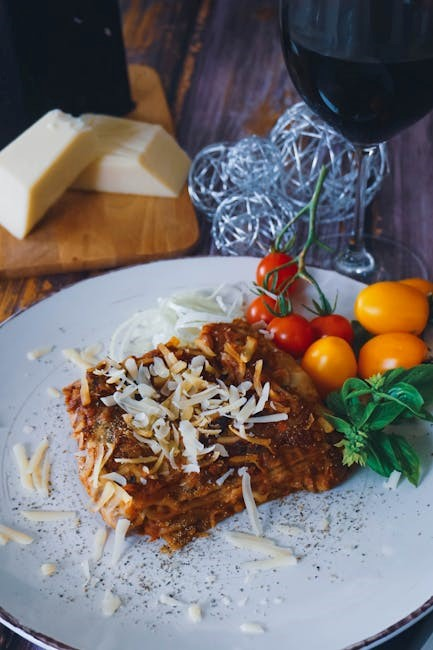
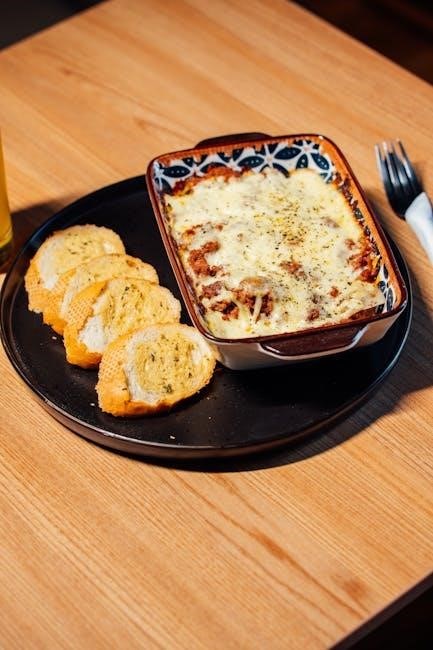
Complement your Trader Joe’s lasagna with thoughtfully chosen sides for a complete and satisfying meal. A vibrant garden salad with a light vinaigrette provides a refreshing counterpoint to the richness of the lasagna. Garlic bread‚ toasted to golden perfection‚ is a classic pairing‚ perfect for soaking up the delicious sauce.
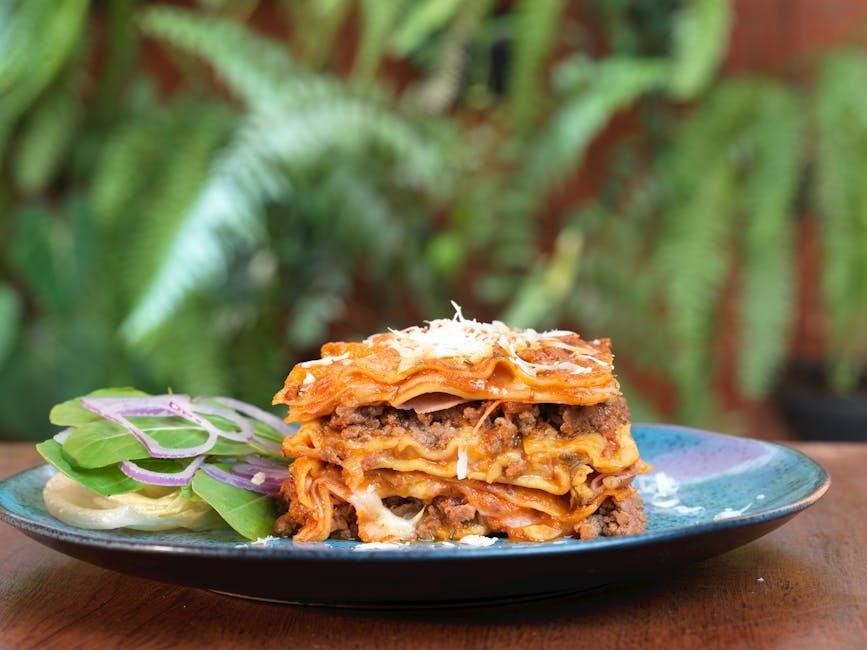
For a heartier meal‚ consider roasted vegetables like broccoli or asparagus. A simple fruit salad offers a sweet and light finish. Wine pairings include a medium-bodied Italian red like Chianti or a crisp Pinot Grigio. Don’t forget a sprinkle of fresh parsley for a pop of color and flavor!
Leftover Storage and Reheating Instructions
Proper storage is key to enjoying leftover Trader Joe’s lasagna. Allow the lasagna to cool completely before transferring it to an airtight container. Refrigerate promptly‚ and it will remain fresh for 3-4 days. For longer storage‚ consider freezing individual portions for up to 2 months.
Reheating options include the oven or microwave. For the oven‚ preheat to 350°F (175°C) and bake‚ covered‚ for 20-25 minutes‚ or until heated through. The microwave offers a quicker solution; reheat individual portions on medium power for 2-3 minutes‚ stirring halfway through. Ensure the lasagna is thoroughly heated before consuming.
Troubleshooting Common Issues
Dry Lasagna? If your Trader Joe’s lasagna appears dry‚ try adding a splash of water or tomato sauce to the baking dish before covering it with foil during baking. This creates steam‚ helping to retain moisture. Alternatively‚ ensure the lasagna isn’t overcooked; reduce baking time slightly next time.
Still Frozen? If the lasagna is still frozen in the center after the recommended cooking time‚ don’t panic! Simply cover it loosely with foil and continue baking for another 15-20 minutes. Avoid increasing the oven temperature drastically‚ as this can burn the edges before the center thaws. Patience is key!
Lasagna is Dry
Addressing a Common Concern: A dry Trader Joe’s lasagna can often be remedied with a few simple adjustments. The most effective solution is to introduce moisture during the baking process. Before covering the dish‚ add approximately ¼ cup of water or tomato sauce around the edges of the lasagna – not directly on top.
Foil is Your Friend: Ensure the lasagna is tightly covered with aluminum foil for the majority of the baking time. This traps steam and prevents excessive moisture loss. Remove the foil during the last 10-15 minutes to allow the cheese to brown. Avoid overbaking‚ as this is a primary cause of dryness.
Lasagna is Still Frozen
Don’t Rush the Process: Discovering your Trader Joe’s lasagna is still frozen when baking time is up is a common issue‚ easily addressed with patience. Never attempt to cook a frozen lasagna at the originally suggested time; it requires significantly longer.
Extend Baking Time: Increase the baking time by approximately 30-60 minutes‚ keeping the lasagna covered with foil for the majority of this extended period. Regularly check for doneness – see the “Checking for Doneness” section for visual cues. Ensure the internal temperature reaches 165°F (74°C) to guarantee thorough heating. Patience is key for a perfectly cooked lasagna!
Nutritional Information (Approximate Values)
Understanding the Numbers: While precise nutritional details vary slightly depending on the specific Trader Joe’s lasagna variety‚ here’s a general guideline per serving (approximately 1/6 of the lasagna). These values are approximate and intended for informational purposes only.
Key Stats: Expect around 350-450 calories‚ with 15-20g of fat (including 8-12g of saturated fat). Sodium content is typically high‚ ranging from 600-800mg per serving. Carbohydrates fall within 30-40g‚ with 5-8g of fiber and 8-12g of sugar. Protein content is substantial‚ around 20-25g. Remember to consult the packaging for the most accurate information.
Customer Reviews and Popular Opinions
What People Are Saying: Trader Joe’s lasagna consistently receives positive feedback‚ lauded for its convenience and surprisingly authentic taste. Many customers appreciate it as a quick weeknight meal solution‚ especially when short on time. Common praise centers around the rich sauce and generous cheese layers.
Popular Hacks: Online forums reveal frequent customization attempts – adding vegetables like spinach or mushrooms‚ or boosting the cheese content. Some reviewers suggest letting the lasagna thaw slightly before baking for more even heating. A recurring theme is its value for money‚ often compared favorably to more expensive frozen lasagna brands. Overall‚ it’s a beloved staple for many Trader Joe’s shoppers!